
Ramen Toppings Explained: Chashu, Kikurage, Menma and More
A bowl of ramen is more than noodles and broth. The toppings add texture, richness and contrast, and they're often what makes one bowl feel different from the next. If you've ever looked at a ramen menu and wondered what kikurage or menma is, this guide explains the common toppings in plain English and shows which Ramen Wakusei bowls come with each one.
The classic toppings, and where to find them
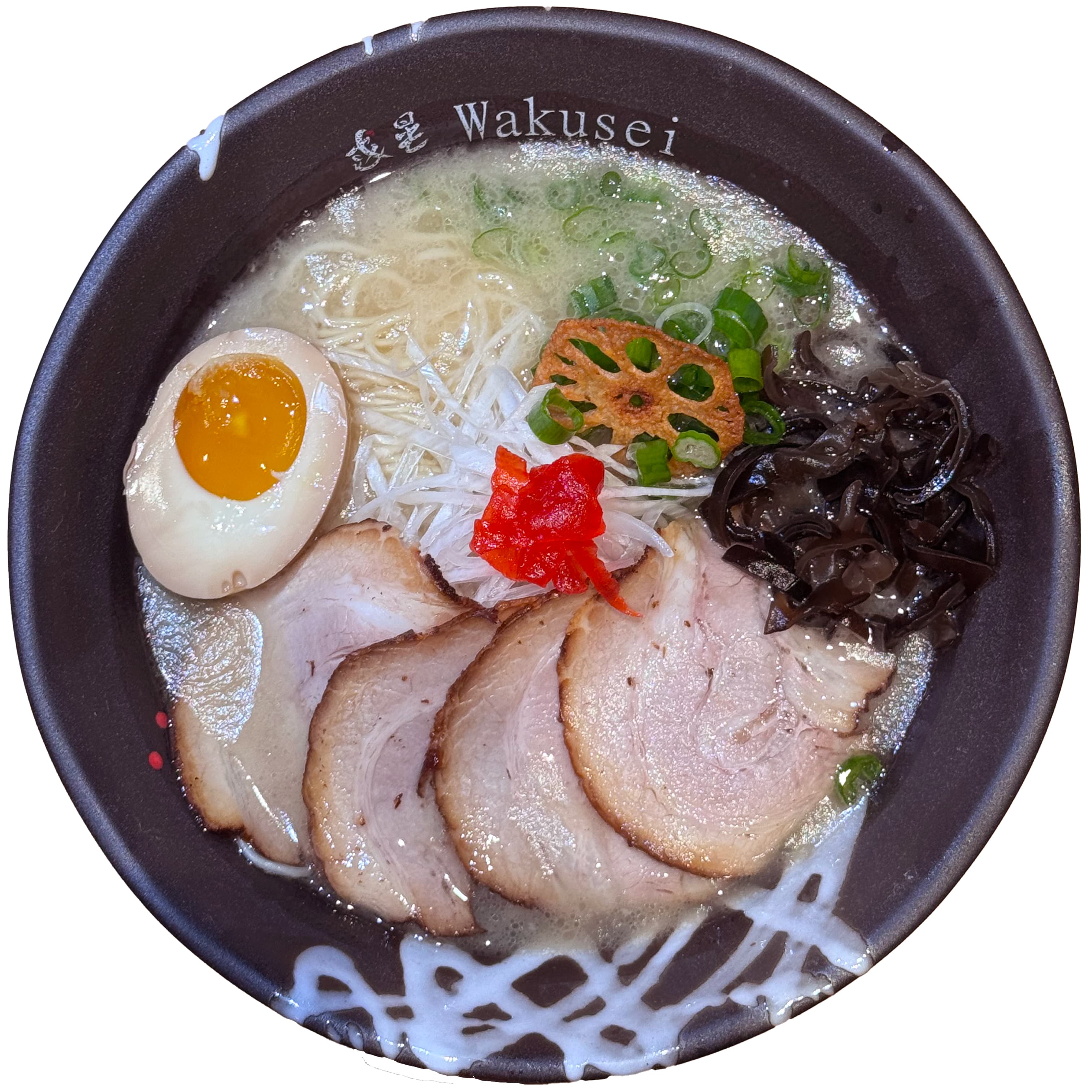
- Chashu: Japanese-style sliced pork, usually pork belly or shoulder simmered in a soy-based seasoning. Venus and Mars come with pork belly chashu and Mercury with chashu. On the abura soba side, Leo and Libra have chashu, and the Orion rice bowl is built around torched pork chashu.
- Seasoned soft-boiled egg: often called ajitsuke tamago or ajitama, it's a soft-boiled egg marinated in a seasoned liquid so the white picks up flavor while the yolk stays soft. Venus, Mercury, Mars, Neptune and Saturn each come with half a seasoned soft-boiled egg.
- Kikurage: wood ear mushroom, a thin, dark mushroom valued for its springy crunch more than its flavor. It's on Venus, Mercury, Mars, Neptune and Earth.
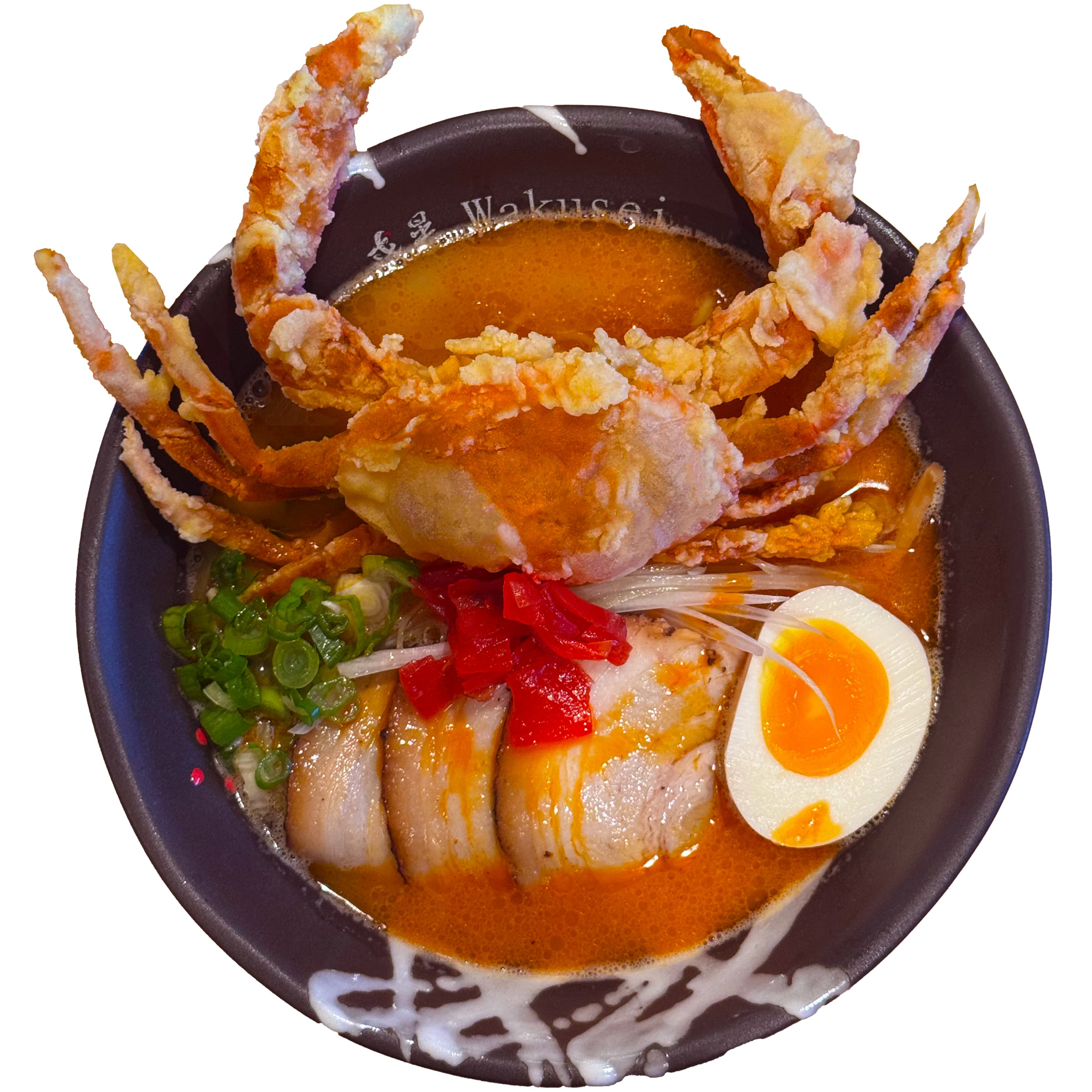
- Menma: bamboo shoots, seasoned and served in strips, with a crunchy-tender bite. Saturn has bamboo shoots, and so do the Leo, Aries and Golden Sun abura soba.
- Nori: a sheet of dried, pressed seaweed that softens as it sits in the broth. Mercury is our only ramen with nori, which suits its kombu kelp and bonito broth.
- Green onions: sliced scallions add freshness and a little bite. Every ramen on our menu has them.
Less common toppings in our lineup
- Black garlic sauce: black garlic oil, sometimes called mayu, is made by cooking garlic until it turns dark, which gives it a deep, roasty, slightly bitter-sweet flavor. Venus is finished with our signature black garlic oil.
- Fried lotus root: lotus root slices have a lacy pattern of holes and turn crisp when fried. You'll find them on Venus and Earth.
- Pickled radish: a tangy, crisp counterpoint to a rich broth. It's on Venus, Mars, Saturn and Earth.
- Sweet corn: a classic in many ramen shops, adding sweetness against heat. Mars pairs it with chili-garlic broth, and Earth has it too.
- Tobiko: flying-fish roe, the small, bright beads that pop as you eat them. Golden Sun, our A5 Wagyu abura soba, is topped with tobiko.
Pick your bowl by topping
- Chashu and a seasoned egg in a rich pork broth: Venus, our signature tonkotsu, or Mars if you want it spicy.
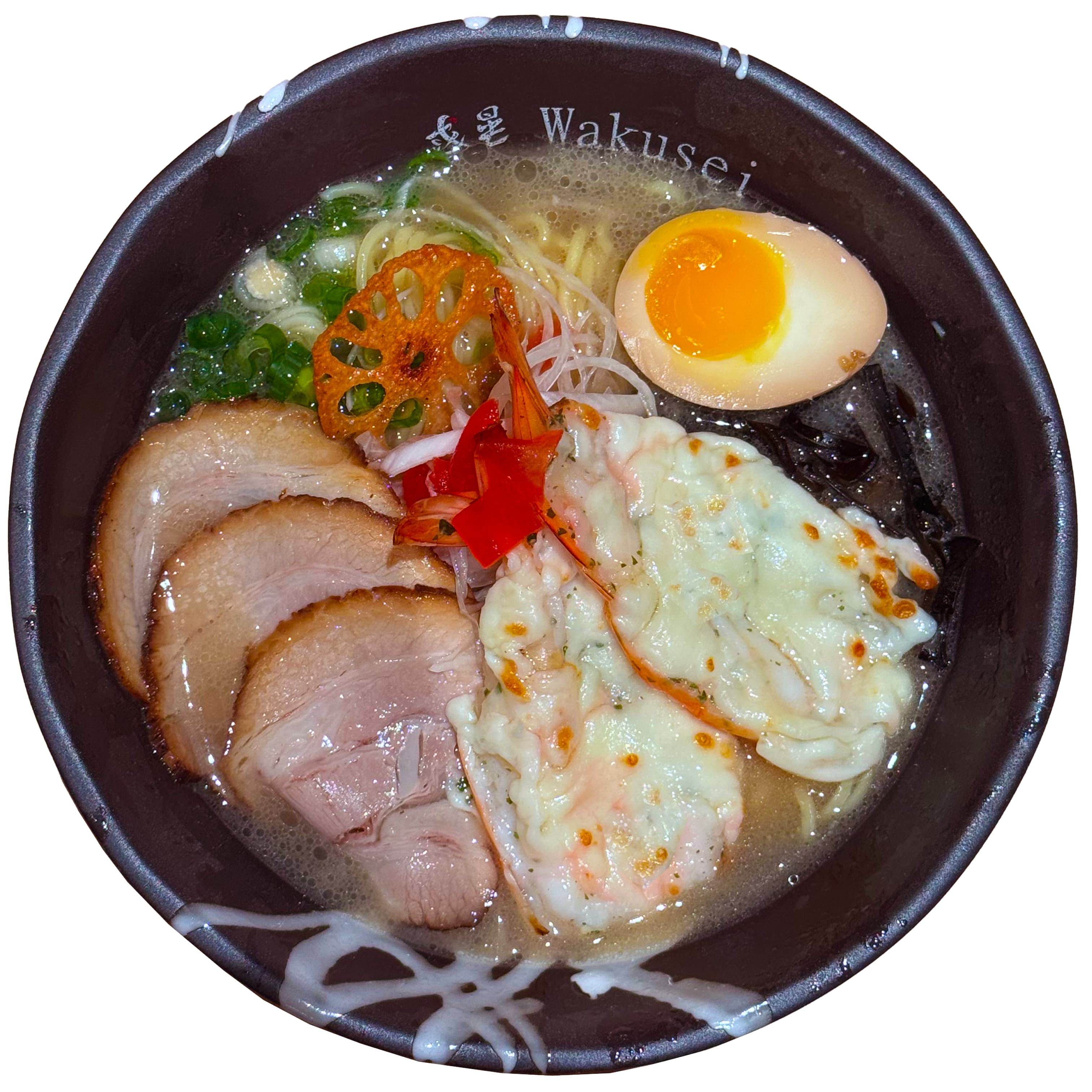
- Nori and a lighter broth: Mercury, with kombu kelp and bonito broth, chashu and half a seasoned egg.
- Seafood instead of pork: Neptune has wild jumbo shrimp, sea bass fillet and scallops, and Saturn has a jumbo crispy soft-shell crab with bamboo shoots.
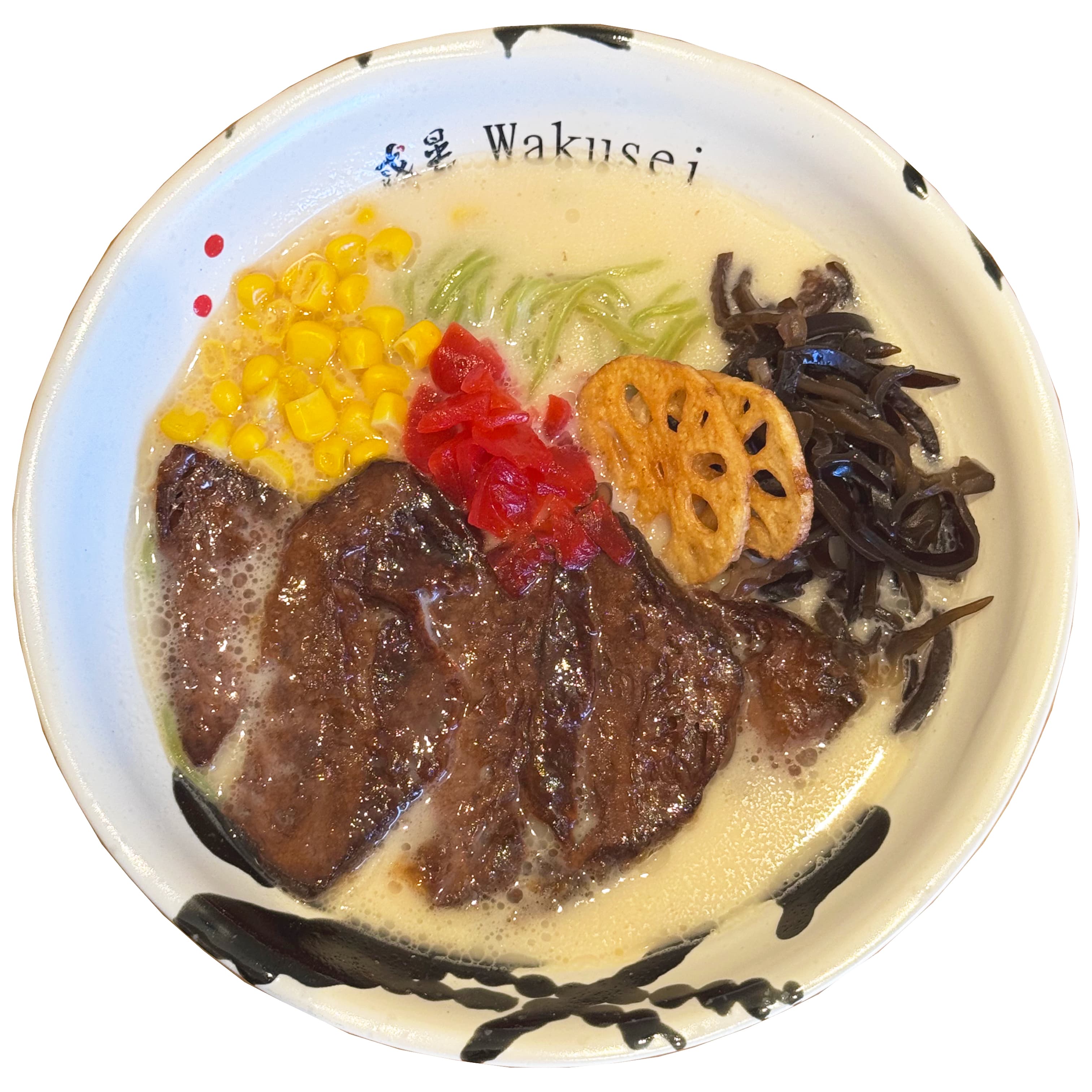
- No meat or egg: Earth is 100% plant-based, with a high-protein plant-powered steak, kikurage, sweet corn, fried lotus root, green onions and pickled radish.
- Egg yolk mixed into the noodles: our abura soba is brothless, and Leo, Libra, Virgo and Aries come with an egg yolk you stir into the noodles.
Each dish page lists its full ingredients. If you have a food allergy or dietary restriction, please ask our staff before ordering. Ramen Wakusei is at 585 E El Camino Real, Sunnyvale, CA 94087, open daily 11:00 AM – 9:00 PM; walk in, join the online waitlist, or order online for pickup.
Frequently Asked Questions
What is kikurage in ramen?
Kikurage is wood ear mushroom, a thin, dark mushroom used in ramen for its springy, crunchy texture. At Ramen Wakusei it's on Venus, Mercury, Mars, Neptune and Earth.
What is chashu?
Chashu is Japanese-style sliced pork, usually pork belly or shoulder simmered in a soy-based seasoning. At Ramen Wakusei, Venus and Mars come with pork belly chashu, Mercury with chashu, and the Orion rice bowl is built around torched pork chashu.
Which Ramen Wakusei ramen has no egg or meat?
Earth is 100% plant-based. It comes with a plant-based broth, a high-protein plant-powered steak, kikurage, sweet corn, fried lotus root, green onions and pickled radish, with no egg or meat.
Dishes in this guide
Related
← Back to the blog